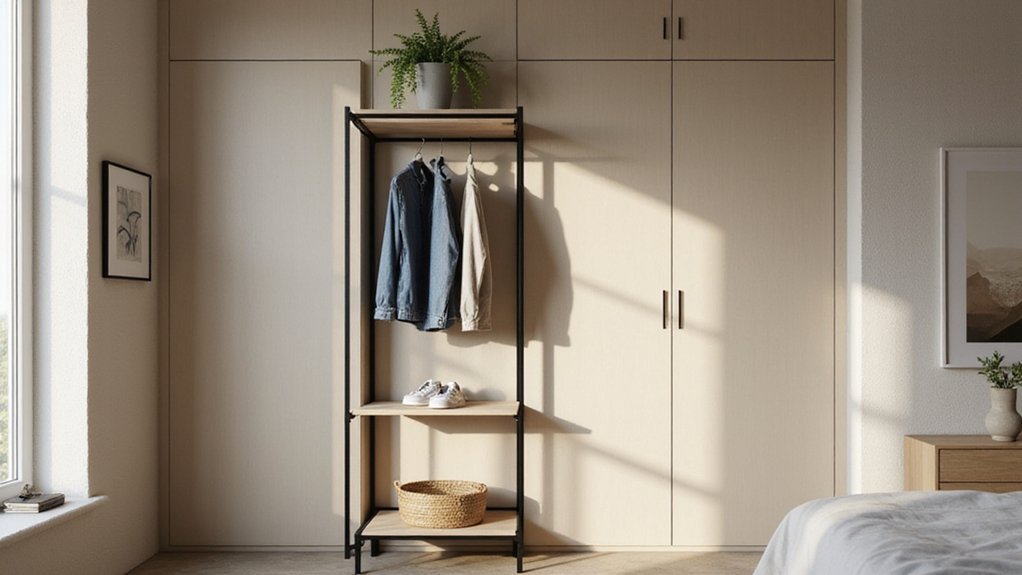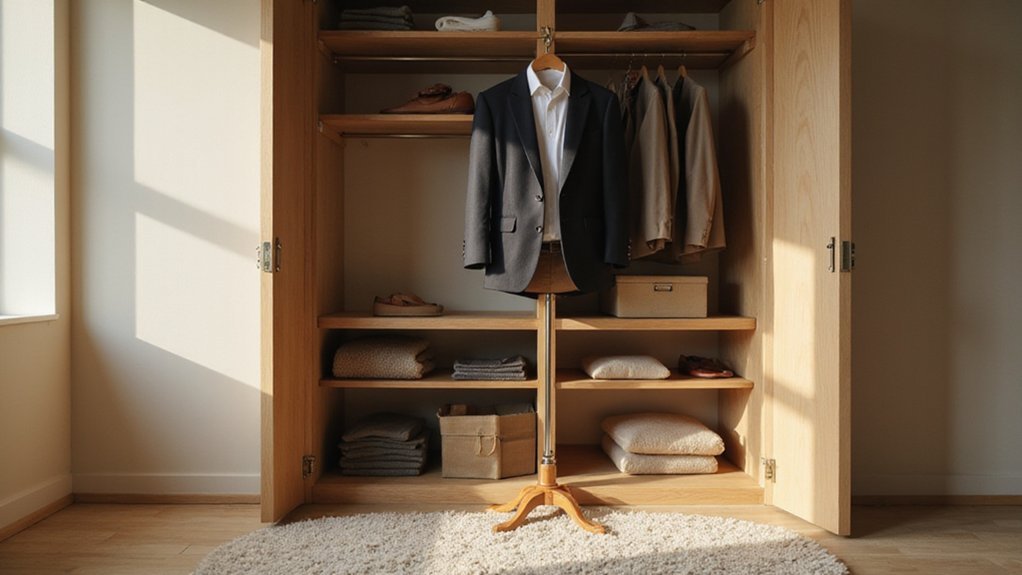
Struggling to find items in your closet due to poor lighting? Adding can lights can make a big difference. They brighten up your space, help you see colors accurately, and make your closet look more stylish and spacious.
Installing LED fixtures with the right color temperature and a motion sensor can also save you energy.
Keep reading to learn how to set up can lights safely and effectively to transform your closet.
Top Benefits of Adding Closet Lighting to Your Home
Adding lighting to your closet transforms an often dark, cramped space into one that’s functional and visually appealing. Proper lighting eliminates shadows and dark corners, making it easier to locate and select your belongings quickly and accurately. It helps you designate specific areas for different items, preventing deep shelves from becoming black holes for lost objects. With clear visibility, your morning routine becomes less stressful, and you can easily see colors and textures for better outfit choices. This is especially helpful when you have organized sweaters in closet using practical methods that keep everything visible and accessible. To securely mount light fixtures or shelves, you can use wall anchors in drywall for a clean and stable installation. You can also use smart storage strategies to arrange pots and pans nearby for a fully coordinated space.
Beyond just improving visibility, lighting enhances the overall look of your closet. Warm, natural tones create a cozy atmosphere that invites you to spend time in the space. Bright, even lighting options open up the area, making it feel larger and more inviting—similar to a boutique rather than a storage room. When thoughtfully designed, lighting adds both functionality and aesthetic charm, making daily organization easier and your space more enjoyable.
How to Choose the Right Closet Light Type
To select the appropriate closet light type, start by assessing the size and layout of your space along with safety requirements. For small reach-in closets under 20 square feet, a flush mount LED providing 150 to 400 lumens is sufficient. Walk-in closets up to 100 square feet require brighter lighting, around 800 to 1,500 lumens, ideally achieved through recessed perimeter lights or track systems. Always opt for enclosed fixtures to meet code and reduce fire hazards, avoiding bare bulbs. For a stylish and functional storage solution, consider integrating kitchen cabinets with plate racks to optimize organization. LED strip lights work well under shelves for even, low-profile illumination, while puck lights are ideal for lighting cabinet tops. Look for energy-efficient fixtures with high ratings to ensure low heat output and long-lasting performance. If you want adjustable brightness, choose fixtures with dimming capabilities to avoid straining your eyes and to create a comfortable environment. Maintain at least 12 inches of clearance between fixtures and stored items to prevent damage and ensure safety. Use high-CRI LEDs rated 90 or above for accurate color rendering, especially when choosing lights for clothing or accessories. Lastly, avoid fixtures above 3000K color temperature to prevent harsh, cold lighting that can make your closet feel uninviting. For guidance on spacing your fixtures, consider that the standard bookshelf width often influences how far apart light sources should be placed for even coverage.
Why Closet Lighting Color Temp and Brightness Matter
Choosing the right closet lighting involves paying close attention to color temperature and brightness. Aim for a color temperature between 3000K and 4000K, which provides a neutral white light that helps you accurately distinguish colors. At 4000K, you can better see dye migration on white cotton, while warmer 3000K lighting enhances skin tones, making accessories look their best. Brightness levels should be at least 10–20 foot-candles for general illumination and 20–50 foot-candles in task zones like dressing areas. Additionally, selecting lights with a CRI (Color Rendering Index) of 90 or higher ensures true color accuracy and reduces eye strain. Avoid blue-light LEDs above 5000K, as their high energy can accelerate fiber degradation in delicate fabrics like silk and wool. Sticking with the 3000–4000K range and appropriate lumens helps preserve your garments while providing clear, comfortable lighting.
Where to Install Closet Lights for Maximum Visibility
To achieve maximum visibility, install lighting directly on hanging rods and shelving units. Use vertical LED strips along the sidewalls to eliminate shadows in hidden corners. Angle recessed lights toward the back of the closet to evenly distribute light and reduce dark spots. Attach LED strips under each shelf to provide direct lighting for stored items and improve task visibility. Place lights beneath shelf overhangs to illuminate items on lower levels without obstruction. Incorporate toe-kick lighting at foot-level areas like shoe racks to enhance visibility of lower storage. Additionally, install wall sconces or uplights on vertical surfaces to accentuate height and eliminate shadowy zones. Carefully mapping shadow-prone areas before installation ensures every corner is well-lit, making your closet easier to navigate and items easier to see.
Do Closet Motion Sensors Save Time and Energy?
Yes, closet motion sensors save time and energy. They can cut energy use by 25 to 75 percent by automatically turning off lights when you leave the space. This prevents you from wasting power on forgotten bulbs and significantly reduces overall consumption. Field audits show that median light runtime drops from about 4.2 minutes to just 51 seconds. As a result, you can save between 5 cents and 20 cents per square foot annually, with a payback period generally between 2 and 4.2 years. When choosing a location for the sensor, consider a dry, stable area to avoid humidity and vibrations that could affect calibration. For a similar approach to securing fixtures, you can use masonry wall anchors to ensure the sensor mounts stay firmly in place on concrete or brick walls. A well-organized drawer layout can benefit from practical methods to keep utensils separated and easily accessible.
Maintenance is minimal; you only need to calibrate the sensor’s sensitivity and set the timeout between 30 and 120 seconds for optimal results. Dual-technology sensors enhance accuracy by preventing false triggers. You also avoid fumbling with switches in tight spaces, and the automatic shutoff helps reduce fire risk. Overall, installing motion sensors in your closet offers a practical way to reclaim time and energy while lowering your long-term costs.
Use Closet Lighting to Make a Small Closet Feel Bigger
Using layered lighting can make your small closet appear larger. Combine recessed ceiling lights with vertical LED strips along the edges of your wardrobe to draw the eye upward, emphasizing height. Installing slim LED bars under shelves or behind rods creates hidden fixtures that eliminate harsh shadows while maintaining a clean, minimal look. Choose cool white bulbs (4000K–5000K) for a bright, airy feel. Placing a full-length mirror opposite your light source doubles the brightness and tricks the eye into perceiving more space. These strategies instantly transform a cramped closet into an open, organized area.
Common Closet Lighting Mistakes to Avoid
Avoid relying on a single overhead light source because it creates shadow zones that hinder visibility. Instead, use LED strip lights under shelves to provide even illumination throughout the closet. Choose lighting with a color temperature between 3000K and 4000K to ensure colors look natural and inviting, avoiding the harshness of 5000K daylight LEDs which can exaggerate shadows and damage fabrics. Opt for high-CRI LEDs above 90 to accurately display the true colors of clothing and accessories. Avoid battery-powered stick-on lights in humid environments—they tend to fail quickly. Instead, install hardwired fixtures that can be controlled easily with wireless switches, ensuring reliable operation. Always turn off the power at the circuit breaker before beginning any wiring work to prevent shocks and electrocution. Consider how adding shelves can create dedicated mounting surfaces for LED strips, improving their placement and coverage. Incorporate dimmers on all fixtures to adjust lighting levels for different tasks; non-dimmable lights limit flexibility and usability. Finally, keep fixtures at a safe distance from clothing to prevent heat damage and always hire a licensed electrician to ensure wiring safety and proper installation. For a cohesive look, consider integrating arched bookcases with cabinets to neatly conceal wiring and provide additional storage.