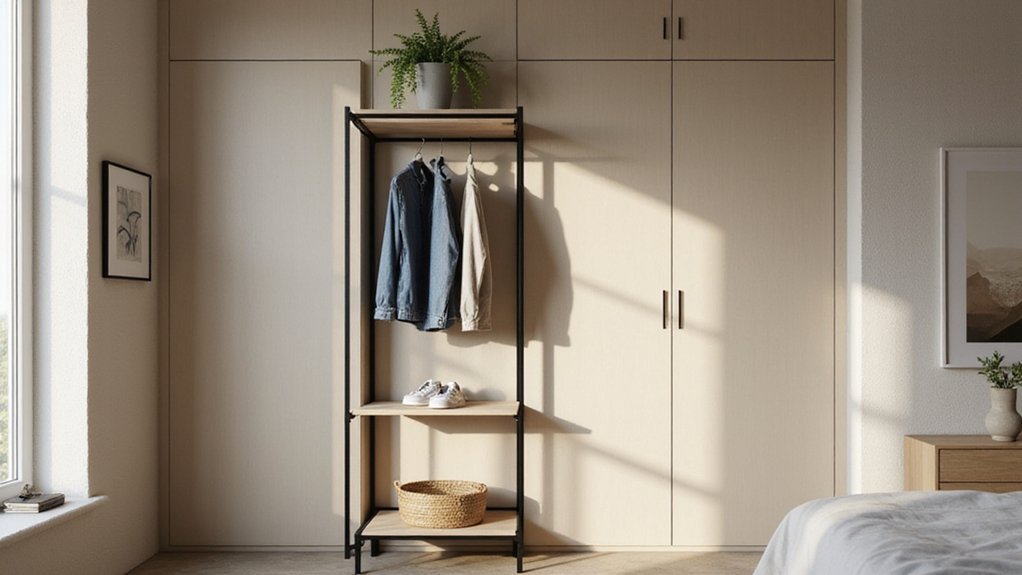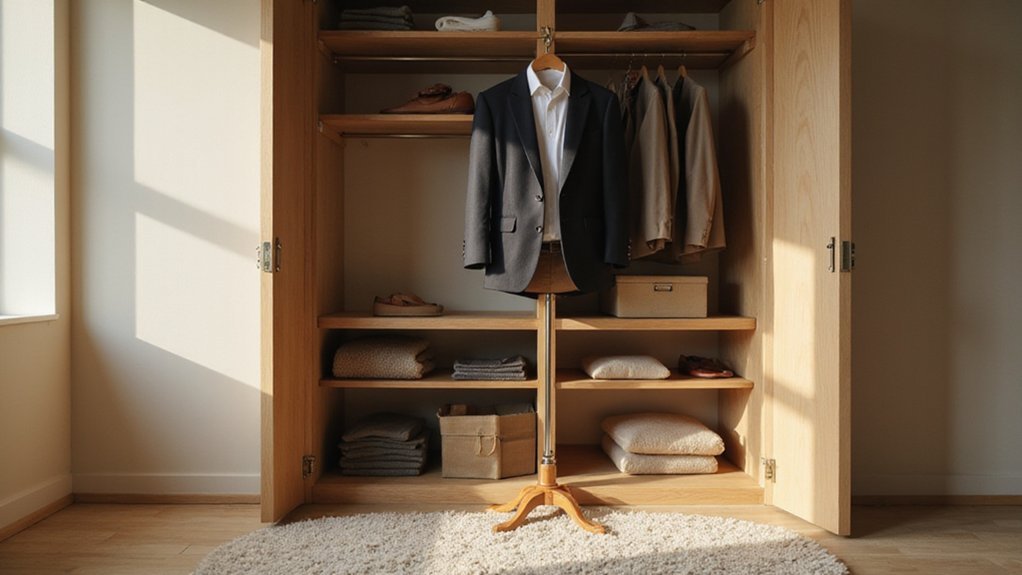
Ever find yourself rifling through a cluttered closet and struggling to find the jeans you want? Organizing your denim collection can make your mornings smoother and keep your space tidy.
By sorting, folding, and stacking strategically, you’ll create an easy-to-navigate system that keeps your favorite pairs front and center.
Keep reading for simple steps to transform your closet.
Pull Every Pair Out and Group Them by Style and Fit
Start by pulling every pair of jeans out of your closet, drawers, bins, and under-bed storage to see your full denim inventory. Lay them flat on your bed to assess the jean material and note your style evolution over time. Next, group the jeans by distinct style categories such as skinny, wide leg, flare, straight, or cropped. Focus on style differences rather than color to identify unique fits like bootcut, mom jeans, boyfriend, tall, or petite variations. Creating these groups makes it easier to find specific styles during outfit planning. To ensure your hanging system holds securely, mount the rod using wall anchors in drywall for a stable, long-lasting installation. Establish clear physical zones or stacks for each style to avoid mixing them up later. When organizing, group jeans by similar material quality to help manage creases since higher-quality denim resists creasing and keeps its shape longer. Use label makers or handwritten tags to clearly identify each category on shelves or within drawers. If you have a hanging system, consider installing a custom closet rod to keep jeans easily accessible and wrinkle-free. Building a system that aligns with your wardrobe workflow ensures every pair has a designated place, simplifying the selection process. An effective method is to sort and arrange each stack vertically to maximize visibility and prevent hidden piles.
Donate or Resell Jeans That Don’t Fit or You Rarely Wear
Once you’ve sorted your jeans by style, the next step is to donate or resell those that no longer fit or gather dust. For donation, consider local thrift stores or organizations like Vietnam Veterans of America, which offers free home pickup. If your jeans are too worn to wear, animal shelters might accept them for bedding or padding.
For jeans in good condition, reselling is a great option. Use platforms like eBay or Poshmark for a wide reach, or Depop if your jeans have a trendy edge. Facebook Marketplace allows for quick local sales, while ThredUP handles all the selling logistics for you. Consignment shops such as Buffalo Exchange can give you instant cash. Before listing or dropping off, ensure your jeans are clean and free of tears—tattered jeans aren’t accepted. Bundle similar sizes together to make the process more efficient. This not only clears space in your wardrobe but also extends the life of your jeans by giving them a second chance with someone else.
Choose the Best Folding Method to Organize Jeans
The best folding method depends on your space constraints. For shelves, use the standard rectangular fold: lay jeans flat, fold lengthwise, tuck in excess fabric, and bring the hem up to the waistband. Stack no more than three pairs high to prevent crushing. In tight spaces, opt for the thirds or quarters method—fold jeans lengthwise, then in thirds or quarters to maximize space efficiency. For an eco-friendly approach, the roll-and-tuck technique creates compact, upright bundles that stand well in drawers and help reduce wrinkles. This method also makes it easier to view and access multiple pairs without disturbing the entire stack. The popular Kumari Method achieves efficient stacking by folding jeans in half before splitting at the crotch and folding twice for a vertical arrangement. For a more durable long-term solution, you can store these bundles in a cardboard magazine file to keep them neat and upright. This approach is similar to choosing a heavy-duty tool chest when prioritizing long-term storage and organization over cost. For a similar sense of structure, consider a bookcase with doors to keep folded jeans dust-free and visually tidy.
Store Jeans in Drawers So You Can Actually See Every Pair
To see every pair of jeans in your drawer at a glance, store them upright using the vertical file-folding method. Start by folding each pair lengthwise, with one leg over the other, then tuck the crotch inward to reduce bulk. Fold the hem in thirds or quarters depending on your drawer height for a compact bundle. Stand each pair upright, pockets facing out, so you can easily identify colors and labels without rummaging through stacks. Use drawer dividers to keep rows aligned, preventing jeans from toppling or becoming jumbled. Before folding, smooth out wrinkles to minimize creasing and protect fabric fibers from stress. This technique mirrors the principle of vertical storage organization to keep items visible and easily accessible. If your drawer lacks adequate height, you can instead add adjustable shelves to your cabinet to create the perfect space for upright storage. Group your jeans by how often you wear them—keep favorites at the front for quick access and less-used pairs toward the back. This system maximizes available drawer space while keeping every pair visible and accessible, saving you time and hassle. For a similar approach under the sink, you can use stackable tiered racks to keep bottles and supplies upright and visible.
Stack Jeans on Shelves Without the Pile Falling Over
To stack jeans on shelves without them falling over, you need to ensure proper support and organization. Start by installing shelf dividers every 8 to 10 inches on shelves that are at least 14 inches deep. Mount these dividers flush against the rear wall to prevent lateral movement. Keep in mind that no more than six pairs of jeans should be placed in each divider cell, as overloading weakens vertical stability regardless of available space. Using shelf dividers helps keep stacks from leaning sideways, similar to how drawer inserts prevent utensils from shifting. For best results, ensure the dividers are anchored securely, as this mimics the structural support found in built-in cubby bookcases. Incorporating a bathroom shelf with hamper into your organization methods can provide an additional dedicated space for storing accessories or dirty laundry near your closet setup.
Use the file-fold method to keep jeans compact and upright. Fold each pair into a squared block that can stand on its own. Line your shelves with non-slip material to prevent these blocks from sliding forward. For deep shelves, position dividers precisely at 8-inch intervals to match the typical width of folded jeans. Instead of creating one large pile, build multiple smaller stacks sorted by style. This approach distributes weight evenly, makes retrieval easier, and helps maintain your stacks in an upright position. Consistent folding enhances organization and visual clarity, just as the Marie Kondo method suggests for stacking jeans like books.
When to Hang Jeans and Which Hangers Work Best
Hanging lightweight denim blends with elastane, linen-cotton mixes, or mom jeans that you’ll wear within a few weeks is ideal. Avoid hanging raw, selvedge, or rigid 12 oz+ denim — these require folding to preserve fade development.
Always hang by the hem or cuff using clips, never by the waistband. Fold one leg over the other to align seams, creating a loose fold below the pocket line to prevent sharp knee creases. Limit hanging time to two or three weeks to avoid stretching. Rotate between hanging and folding every four to six weeks to maintain shape.
Use wide, contoured wooden or velvet hangers with shoulder angles of 18 to 20 degrees. Padded hangers or wooden trouser clips distribute weight evenly. Steer clear of thin wire hangers, as they cause stress points and shoulder bulging. For the same reason, consider that bamboo cutting boards resist bacteria better than plastic when selecting kitchen tools for hygiene. To further organize your space, consider displaying your favorite jeans on a wall shelf using creative decor ideas to elevate your closet’s visual appeal. A similar principle of sorting and arranging items by frequency of use can keep your freezer drawer functional and prevent wasted space.
Arrange Jeans by Color to Build Outfits Faster
Arrange all jeans by color before building outfits. Start by grouping all your jeans together, then separate solids from patterned pieces. For multi-colored jeans, identify their dominant hue and place them alongside similar shades. Keep solid colors in a logical sequence—such as from light to dark—then add patterned jeans after their matching base shade. This method creates a clean, visual flow that makes it quick to find the right pair or coordinate a look. Many people find success applying similar strategies used for organizing sweaters in closet, such as stacking folded items to maintain visibility and reduce wrinkles. With this system, you’ll effortlessly grab the correct jeans without hesitation, saving valuable time in your dressing routine.
Keep Your Organized Jean Closet From Falling Apart
To prevent your organized jean closet from falling apart, keep stacking heights to no more than five or six pairs. Stacks taller than that tend to tip forward because of uneven waistbands. Use shorter stacks and add plastic dividers to maintain stability. Rolling jeans into stackable boxes helps prevent shifting and preserves the fabric’s integrity. For drawers, fold jeans with a file-folding method and separate them with dividers to keep each pair visible and upright. Avoid cramming jeans in; leave a small gap to allow easy access and ventilation. When hanging jeans, use bias clips or S-hooks through the belt loops to distribute weight evenly and prevent slipping. Matching uniform hangers enhances security and makes your closet look tidy. Good lighting will reveal any disorganized piles, so make a habit of decluttering regularly. Toss out ripped or ill-fitting jeans to cut down clutter and prevent overcrowding. Use under sink organizers to repurpose small storage solutions for rolled denim in tight closet spaces. Consider using lowered garage racks to store out-of-season jeans in high-ceilinged closets for easy retrieval. Cutting your collection by half can help keep your system functional and your closet organized.