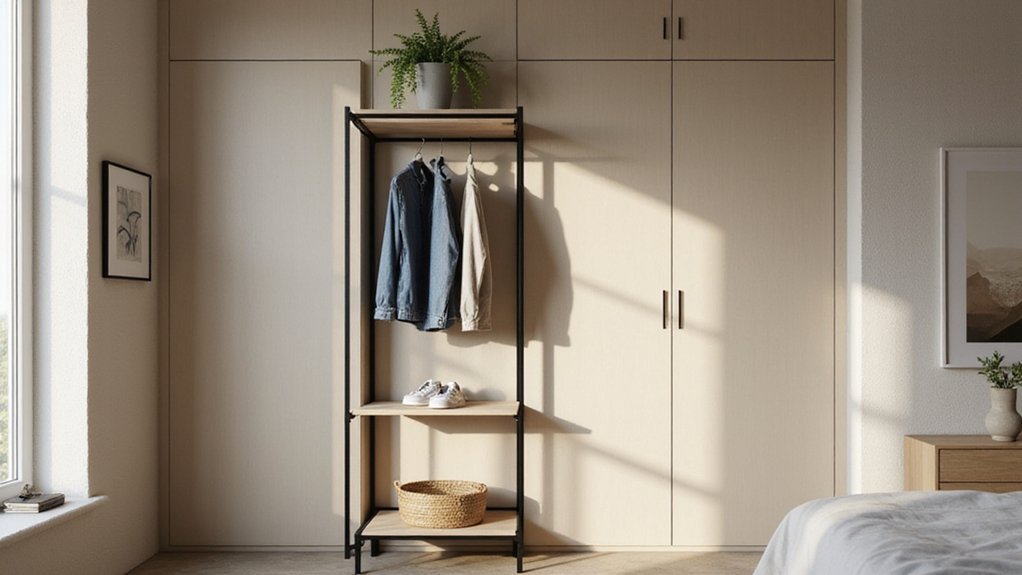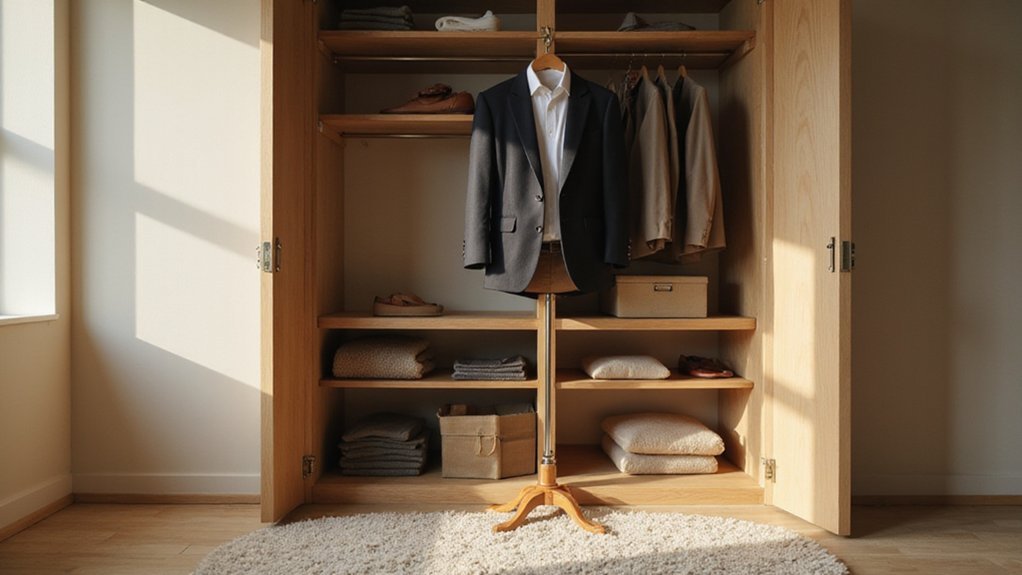
Struggling to keep your closet organized and clothes easy to find? The key is folding and stacking clothes efficiently so you can see everything at a glance.
When done right, it saves space, keeps your belongings neat, and makes getting dressed a breeze. Keep reading to learn simple tips for organizing your folded clothes that really work.
Fold Every Garment the Right Way (T-Shirts to Jeans)
Start with the basics: folding each garment the correct way. For T-shirts, lay them face-up on a flat surface, smoothing out any bumps and aligning all edges. Use the two-imaginary-lines method for speed: pinch the intersections at the top and bottom points, then uncross your arms to fold the shirt neatly. This technique helps preserve fabric by preventing unnecessary creases that can weaken fibers over time. For jeans, fold the legs together, then create a center crease along the length. Fold up from the bottom to the waistband so that the pair forms a compact rectangle. Achieving consistent folds ensures your shirts and pants stack neatly, preventing piles from toppling or becoming uneven. For a wrinkle-resistant and travel-friendly alternative, the roll method works well for T-shirts by starting from the collar and rolling gently to avoid creases. For collared shirts, fasten the buttons first, then smooth and fold into a tidy rectangle. Applying these same principles to organizing your freezer drawer can extend the life of stored items by preventing frost and bruising. Mastering these folding techniques makes it easier to organize and maintain your wardrobe, setting the stage for more advanced storage methods. To securely mount a shelf or rod that supports these folded stacks, you should learn how to install wall anchors in drywall for a clean and sturdy result. For storing your folded stacks, consider using a two-tier shoe rack to maximize vertical space while keeping items accessible.
Choose Bins and Dividers That Keep Folded Clothes Secure
Choose bins with secure lids and adjustable dividers to keep folded clothes in place. Lids prevent your stacks from shifting when you move the bins on shelves and protect clothing from dust and sunlight. On open shelves, dividers create separate compartments that stop stacks from tipping sideways, preserving their neat appearance. Use dividers to organize small items like socks and prevent top-heavy piles from collapsing. Match bin sizes to your garment dimensions—larger bins for bulky sweaters and smaller ones for T-shirts—to reduce shifting and maintain order. Lastly, label each bin clearly to easily identify contents and avoid disturbing the organized stacks. For additional stability, consider using adjustable dividers to create separate compartments, similar to how pots and pans are organized to prevent tipping. For a securely hung shelf, ensure your brackets are anchored into wall studs to bear the full weight of your bins. For a dedicated drawer-based solution, a 2 drawer dresser offers a stable, enclosed space that keeps folded stacks dust-free and upright.
Stack Folded Clothes Vertically to Double Your Shelf Space
Stacking clothes vertically allows you to double your shelf space. Instead of traditional horizontal piles that take up more room and make it difficult to see specific items, upright folding keeps garments compact and accessible. Fold each piece into a neat rectangle that can stand upright without collapsing, smoothing out wrinkles beforehand for crisp edges. For shirts, bring the sides to the center and then fold vertically in thirds. For pants, fold lengthwise from the bottom up. Use an 8.5 by 11-inch notepad as a guide for deeper items to ensure uniformity. This method also supports folded garments to sit level on shelves, preventing them from tipping over. As with Tupperware, using spring-loaded dividers can keep folded items from shifting or falling over. Using clear bins for smaller folded items can further prevent clutter and keep everything visible. For safety, ensure your shelves are properly anchored to the wall to prevent tipping when removing items.
Arrange folded items like books on a shelf, lining them up with the opening facing out. This makes each piece visible at a glance and prevents disrupting entire stacks when retrieving one item. Reserve shelves for vertical rows only, keeping hangers and hanging areas separate. Good lighting helps you see every item instantly, reducing the time spent searching. Shelves with a depth of 12 to 14 inches provide enough space for upright folding without causing instability. Avoid deeper shelves that can cause items to tip or shift.
To maintain a neat setup, use spring-loaded dividers to keep flimsy or lightweight items upright and organized. Consistently folding and lining up your clothes this way maximizes space and keeps your wardrobe tidy.
Organize Folded Clothes by Color and Type for Instant Access
To organize folded clothes for instant access, start by grouping them by category—tops, pants, jackets, and dresses. Within each category, sort items by color following the rainbow order from Red to Violet, then include neutrals like Tan, Gray, and Black. Place each color in a light-to-dark gradient, with white or the lightest shades at the front and the darkest at the back for quick recognition. This approach eliminates guesswork and saves time in finding clothing.
Within each color group, arrange items by fabric amount, such as tank tops to long-sleeve shirts, to make selecting the right layer easier. Store your most-worn colors at the front so you can grab them immediately without rummaging. When it comes to patterns, organize them by their dominant color rather than grouping all patterns together to keep matching seamless. This system minimizes digging through piles and allows you to access exactly what you need in seconds.
Label Uniform Containers So You Never Dig for Clothes Again
Labeling uniform containers clearly helps you find what you need quickly and prevents endless digging through clutter. Use a label maker to create professional, uniform labels that are easy to read. Printed labels from your computer generally look neater and more legible than handwritten tags. For fabric bins, adhesive pocket labels with insertable cards work well because you can update the contents easily. If the fabric could be damaged by adhesive, hang tags are a better choice.
Be specific with your descriptions, such as “kids winter cardigans, size 6,” instead of vague labels like “clothes.” For sentimental items or seasonal clothing, include details like season, size, and year to help identify them later. Use a simple sans serif font at 24 points or larger, with high contrast colors for maximum readability. Place labels on at least two visible sides of each container for consistency.
To make labels durable, cover them with clear packing tape. You can also use label flags to quickly spot different categories at a glance. For added organization, take photographs of the labeled bins and save them in a “storage inventory” folder on your device. This digital tracking makes it easier to locate items without reopening every container. Maintaining consistency in label placement across containers ensures that all stacked boxes display labels outward for easy identification.