Thinking about how to make your corner shelf look more intentional and stylish? The right arrangement can turn a simple corner into a focal point, blending functionality with visual charm.
With a few key tips, you’ll learn how to balance height, add greenery, and create cozy lighting that elevates your space effortlessly.
Dive in to find out how to transform your corner shelf into an eye-catching display.
Anchor Your Corner Shelf With Statement Pieces
Start by establishing vertical balance with a tall-form vase between 20 and 28 centimeters, which serves as your primary anchor. Use an empty vase or dry stem to create this tall element, placing it at one corner of the shelf. Add mid-height ceramic or resin showpieces measuring 16 to 21 centimeters near the other corner to counterbalance the tall piece and introduce visual interest at mid-levels. Finally, position low candle holders, around 8 to 14 centimeters, close to the front edge to ground the display and create depth. Selecting one or two large items per shelf as your vertical anchors helps distribute weight evenly, preventing crowded or lopsided arrangements. To ensure heavier statement pieces remain secure, use wall anchors in drywall for any shelf hardware that bears significant load. These statement objects provide structural definition without overwhelming the space, ensuring a balanced and cohesive display. For an organized corner, consider using practical methods to sort your decorative pieces into distinct height groups, similar to how pots and pans are arranged for easy access. You can further enhance the corner display by applying expert painting tips to the shelf itself for a cohesive finish.
Arrange Books and Objects for Visual Balance
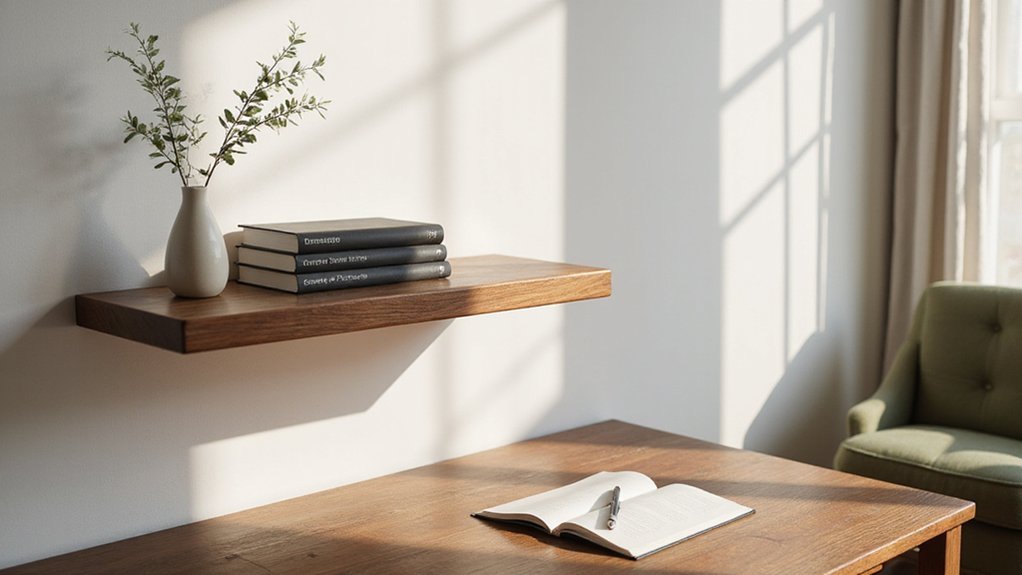
Arrange your books and objects for visual balance by applying the Triangle Rule. Place three items of different heights to form an invisible triangle, with the tallest at the apex and two shorter pieces at the base. Use color coordination with two or three main hues plus neutrals that occupy 60 to 70 percent of the display to create unity. Incorporate texture variation by mixing matte ceramics, glossy books, and woven materials to add tactile interest. Vary stacking patterns by alternating vertical arrangements with horizontal stacks of three or five volumes, graduating from larger sizes at the bottom to smaller on top. Turn some spines inward to reveal page edges for added textural detail. Leave about 30 to 40 percent of shelf space empty, distributing uneven gaps of 3 to 5 inches between groupings to prevent clutter and achieve a balanced look. Use decorative items instead of traditional bookends to anchor the visual zigzag that guides the eye across the shelf. For a sturdy foundation, consider building your own wooden shelf brackets to match the exact dimensions and style of your corner display. A bamboo cutting board placed nearby can serve as a natural, bacteria-resistant surface for staging small decorative objects. You could also build a custom knife block to store kitchen tools near the shelf for added functionality.
Layer Greenery and Dried Botanicals for Depth
To create depth with layering greenery and dried botanicals, start by placing the tallest plant in the corner to serve as an anchor for your arrangement. Use wooden crates or stacked books as risers to vary heights, allowing medium and small plants to cascade outward naturally. This technique produces a flowing, multi-dimensional look that adds interest. Mix broad-leafed plants with narrow, spiky varieties to introduce textural contrast, and let trailing pothos descend from the top shelf to guide the eye downward. Stick to soft seasonal color palettes like creamy whites and gentle greens, and incorporate preserved eucalyptus or dried moss in low-light spots for subtle enhancement. If you are hanging the shelf, remember that anchoring it securely without visible brackets ensures a clean, minimalist look that supports heavier items. To avoid clutter, keep groupings to three to five items per shelf and leave 20 to 30 percent empty space, giving each element room to breathe. Consider using a single stem for significant visual impact, as greenery is central to creating a fresh, spring-inspired look. For consistent organization, store small trinkets or grooming tools in a quality bathroom cabinet with built-in shelves to keep the corner tidy. If you plan to rotate the arrangement frequently, consider a Lazy Susan mechanism for easy access to all items.
Add Warm Lighting to a Dark Corner Shelf
To add warm lighting to a dark corner shelf, start by choosing bulbs between 2700K and 3000K. These color temperatures produce a cozy glow that reflects off wood and fabric, enhancing perceptual brightness. Keep all fixtures consistent in their color temperature to avoid visual clutter. For standard display shelves, aim for 300 to 500 lumens per fixture, but if the spot is particularly gloomy, increase to 1500 to 3000 lumens to achieve sufficient illumination. A barrister bookcase works well for this purpose because its stacking, glass-fronted sections evenly distribute light across multiple tiers. Before installing, verify that your shelf is securely anchored to the wall to support the weight of fixtures and decor safely.
Install LED strips 2 to 4 inches above the shelf surface at a 30 to 45-degree angle toward the wall intersection. This setup helps distribute light evenly across the shelf and bounce off the wall for an ambient glow. Attaching the strips to the back of the shelf enhances the reflection, making objects appear to float. Layering with wall sconces or puck lights under upper shelves adds depth and visual interest. For a complete installation, consider following DIY plans that detail the construction of the bookcase itself.
Adding a dimmer switch allows you to adjust the brightness to suit different moods or times of day. Use high CRI LED strips, above 90, to ensure accurate color rendering, so the items on your shelf look their best under the warm light.
Swap Seasonal Decor for Year-Round Freshness
Swapping a few key decor pieces keeps your corner shelf feeling fresh year-round without a full overhaul. Start with seasonal fabric rotations: in winter, replace lightweight linen throws with chunky knit blankets for added coziness. Come spring, switch to cotton or floral prints that reflect the season’s freshness. During fall, layer in velvet cushions for warmth, then swap to breathable fabrics like linen or silk for summer comfort. To maintain a tidy look, keep your shelf arrangements simple by applying practical sorting methods from smart bathroom countertop organization. For heavier shelves that might tip, you can also implement no-drill anchoring solutions for added stability without damaging walls.
Next, update your botanical accessories. Indoor budding branches or potted bulbs can bring spring indoors, while pinecones and colorful leaves create an autumnal vibe. As seasons change, shift to airy olive stems or simple, minimal floral arrangements. If low maintenance appeals to you, swap fresh flowers for high-quality faux botanicals that look real.
Finally, rotate your color palette with the seasons. Use earthy tones like burnt orange, olive green, and deep browns for fall, then introduce vibrant, tropical hues for summer. These small adjustments will keep your shelf looking fresh and aligned with the time of year without the hassle of a complete decor overhaul.