Deciding how deep your bookshelf should be can feel tricky, especially with so many book sizes and styles.
The right depth ensures your books are well supported without wobbling or causing damage. Generally, shelves around 10 to 12 inches deep work for most books.
But the ideal size depends on what you plan to store.
Keep reading to find out how to measure and choose the best depth for your space.
Why Wrong Bookshelf Depth Damages Books and Wastes Space
A bookshelf depth of around 10 to 12 inches is ideal for most standard books. Too deep and you risk damaging your collection by forcing books back, making you grab the textblock instead of the headcap, which can ruin the structural integrity of the spine. The gap behind deep shelves also encourages leaning, leading to permanent spine warping and harming material preservation. Conversely, if the shelves are too shallow, typically less than 8 inches, heavy books tend to lean forward, causing accelerated wear on their bindings and corners. To prevent this warp damage, it’s crucial to line up books at their far edges rather than their spines, accepting an uneven front appearance for better structural stability. For shelves that are too deep, you may need to remove cabinet shelf clips safely to adjust the shelf position without damaging the wall. Deep shelves can waste up to 40% of your space when storing small paperbacks, creating useless air gaps and reducing overall capacity. Additionally, retrieving books from deeply set shelves can be a hassle, often requiring you to pull out neighboring books just to reach the target. Applying vertical dividers helps reduce leaning and wasted space by keeping books upright. Choosing a shelf depth tailored to your collection prevents physical damage and ensures every inch of storage space is used efficiently. For a kitchen cabinet application, a plate rack is designed to hold dishes at a specific depth, avoiding the waste and leaning issues common with oversized bookshelves.
What’s the Standard Bookshelf Depth for Most Homes?
The standard bookshelf depth for most homes is between 10 and 12 inches. This size comfortably accommodates the majority of books, with a hardcover spine leaving about an inch of space to prevent tight fits. Such depth allows for a wide variety of designs, materials, and colors, making it easier to match your shelving to your decor. Freestanding units usually follow this 10 to 12-inch guideline, providing ample room for both paperbacks and hardcover books. Built-in shelves, on the other hand, are often shallower, typically around 8 to 10 inches, to maximize space efficiency. Choosing a depth of 12 inches offers a safe margin, ensuring your books aren’t crammed, and provides versatility for collections of all sizes. For a clean and secure installation, consider using slatwall panels to create flexible and adjustable shelving that adapts to your storage needs. Applying smart pantry organizing methods to your bookshelves can help you sort and arrange items so the storage setup actually lasts. Applying these practical methods can prevent clutter from building up on deeper shelves.
Bookshelf Depth for Hardcover Books and Oversized Volumes
For most hardcover books, a depth of 10 to 12 inches is sufficient, ensuring they fit comfortably without overhang. This size accommodates the majority of standard titles, with the shelf spine clear of about an inch, making it a practical universal depth. However, oversized art books and atlases often require 14 to 16 inches or more to prevent their edges from jutting out awkwardly. If you are considering customizing your storage, expert guidance suggests that painting IKEA Billy bookcases can help you create deeper, tailored shelves for these larger volumes. To determine the right depth, measure the largest book you plan to store and add at least one inch of clearance. Avoid cramming large books into shallow shelves or magazine racks, which can cause damage or display issues. Instead, dedicate deeper shelves specifically for oversized volumes. A helpful approach is to use drawer organization tips to keep smaller items neatly stored alongside your books. These deeper measurements are also useful for displaying large art folios or creating decorative niches. Just keep in mind: the shelf’s depth should match the biggest book you intend to keep, not your average volume. A 12-inch shelf handles most standard hardcovers, but for truly oversized items, go for 14 to 16 inches. For heavy oversized volumes, using wall anchors in drywall ensures the shelf remains securely mounted.
Bookshelf Depth for Paperbacks, Fiction, and Small Collections
Paperbacks and fiction collections require different shelf depths than oversized hardcovers. For mass-market paperbacks, a depth of 6 to 8 inches is ideal, ensuring they fit snugly without overhanging. Standard trade paperbacks need slightly more room, typically 8 to 10 inches. For most fiction books, 10 to 12 inches works best; the 11-inch IKEA Billy shelf is a popular choice because it accommodates a wide range of sizes comfortably. A depth of about 9.5 inches can also handle average-sized books well. Be sure to leave at least one inch of vertical space above your tallest book. This prevents books from feeling cramped or difficult to pull out. Choosing a shelf with insufficient depth causes books to sit too far back, making them hard to access and increasing the risk of damage over time. If you are storing a rare or antique book, always measure its largest dimension first to select the proper shelf depth. For small collections, shallower shelves of 8 to 10 inches are sufficient, but a 10-inch depth provides enough room for the spine margins to be clearly visible. For versatility and ease of access without overhang, a shelf depth between 10 and 12 inches is recommended for standard novels and trade paperbacks. When styling these shelves, consider incorporating decorative bathroom shelves to add both style and practical storage to your space. A well-chosen depth also allows for creative display arrangements that make book spines easy to browse and visually appealing. Building your own shelves with a custom depth is made simple by following DIY wooden shelf bracket plans.
When You Need Extra Depth for Art Books and Albums
Oversized art books and albums require a depth of at least 14 to 16 inches to prevent overhang and damage. First, measure your largest art book to determine the necessary shelf depth, then add one inch for clearance. This extra space helps avoid binding wear and makes it easier to remove the books without damage. For oversized albums, a depth of 15 to 18 inches provides even more stability and reduces the risk of tipping. Avoid squeezing books tightly on the shelf; leave one to two inches of breathing room to accommodate slight variations and easy access. If you own only a few large books, consider reserving one deeper lower shelf instead of adjusting every shelf in the unit. Remember, usable depth does not include the back panel, so always check the internal space before purchasing new shelving. Thicker wood, measuring about 1.25 to 1.5 inches, is recommended for deeper shelves to support the weight of large art books securely and prevent bowing or instability. For additional storage ideas, consider using drawer dividers to organize smaller accessories or bookmarks within a drawer near your bookshelves. Planning the overall unit depth from the start aligns with the DIY approach used in cubby bookcase builds, where internal clearance is determined before cutting materials. To prevent a top-heavy unit from tipping, always secure your bookshelf to the wall using brackets or straps.
Choosing Adjustable Shelving Depth for Mixed Book Sizes
For mixed book sizes, aim for adjustable shelving depths of 10 to 12 inches, which is the standard for most collections. This range comfortably accommodates typical hardcovers and paperbacks without wasted space. When you include vintage collections with slimmer paperbacks, assign one or two shelves a shallower depth of 6 to 8 inches—ideal for slim volumes. For display or storage of art books and folios, opt for deeper shelves of 14 to 16 inches, ensuring they have ample space without bending or damage. To prevent sagging when using deeper shelves for heavy books, you can apply a hardwood front edge to reinforce long spans, similar to techniques used for building a sturdy knife block.
Adjust vertical spacing based on book height: 9 to 10 inches for paperbacks and 11 to 13 inches for hardcovers. To prevent sagging, keep shelf spans under 30 inches when heavily loaded, and reinforce long or heavy shelves with a hardwood front edge. This approach allows you to mix standard hardcovers, art books, and paperbacks on one adjustable unit efficiently, avoiding wasted space and protecting your collection from damage.
How Much Space to Leave Around Your Bookshelf
Ensure there is at least 32 inches of open space in front of your bookshelf for comfortable browsing; 36 inches is even better to avoid bumping into furniture. Leave a few inches of clearance on each side of the unit to prevent it from looking cramped and to allow better lighting around the shelves. Keep the bookshelf at least 12 inches away from door frames to avoid blocking door swings. Maintain 3 inches of space around outlet switches to allow for easy access. Finally, subtract 8 to 12 inches from your ceiling height to prevent the unit from feeling oppressive and to ensure balanced proportions within the room. For additional guidance, a standard bookshelf width often ranges between 24 and 36 inches depending on the intended space and load. These measurements help your bookshelf fit well and stay practical for daily use. For optimal storage, consider that standard closet shelves are typically 12 to 16 inches deep, which is a useful reference for planning your bookshelf depth. You can also apply smart organizational methods to keep items on the shelves sorted and arranged for lasting storage efficiency.
Bookshelf Depth for Non-Book Items and Decor
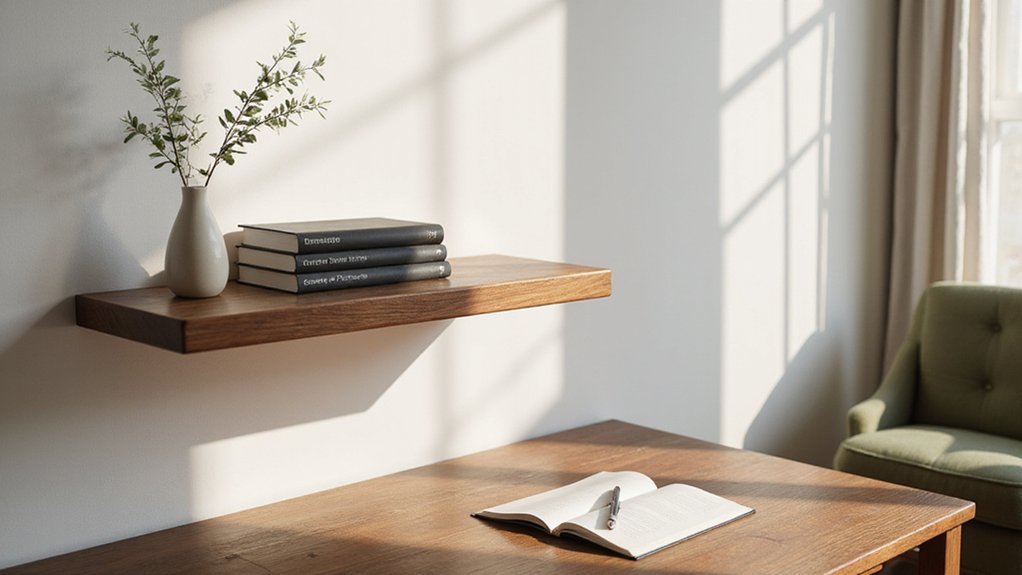
For mixing books with décor like vases, framed photos, or candles, a shelf depth of 8 to 10 inches is ideal. Smaller items don’t need much space, and shallower shelves help keep your display tidy and intentional. For decorative accents such as small plants or photo frames, a depth of 6 to 10 inches provides enough room without overwhelming the display area. When planning for lighting placements, add extra clearance to avoid shadows or overheating—usually around 2 inches beyond the fixture’s size. Oversized art books or vinyl records require deeper shelves, typically 14 to 16 inches, to prevent overhang and ensure stability. Always account for 1 to 2 inches of extra space around your largest item for easy access and safe handling. A standard 12-inch depth works well for most mixed collections, but prioritizing measurements of your biggest items first helps prevent wasted space and ensures your shelves suit your specific needs. If you plan to place bookshelf speakers on the shelf, their depth and rear port clearance will also influence the ideal measurement.
Matching Bookshelf Depth to Room Layout and Doorways
Matching bookshelf depth to your room layout and doorways is essential for both functionality and airflow. Aim for a minimum of 30 to 36 inches of clearance between the bookshelf and doorways to allow smooth circulation. In hallways, keep the depth to 8 inches or less to avoid blocking pathways, while 12-inch deep shelves provide a balanced look without appearing bulky. Always measure your space and check that adding the bookshelf does not interfere with door swings by confirming wall clearance. In small living rooms, adopt a shelf-to-room width ratio of about one-third to one-fourth of the room’s width to prevent overcrowding. Deep shelves, measuring around 14 to 16 inches, should be reserved for low-traffic areas, as they can be cumbersome in busy spaces. When integrating furniture, measure the largest item nearby and add one to two inches for easy access and proper clearance. A depth of 10 to 12 inches suits most hardcover books and maintains an open, spacious feel. In tight offices, avoid very deep shelves as they can restrict movement and make the space feel cramped.