Looking to make your open shelves in the living room both stylish and organized? If so, it’s all about balancing heavier items at the bottom with lighter pieces above to keep things stable and airy.
With a few simple tricks on grouping items and adding textures, you can create a curated look that’s both inviting and clutter-free.
Keep reading for the full guide to mastering open shelving.
How to Style Open Shelves With a Heavy Bottom and Light Top
To style open shelves with a heavy bottom and light top effectively, focus on balancing perceived visual weight rather than actual mass. Place larger, denser items such as dark ceramic bowls or textured baskets on the lower shelves to anchor the arrangement. These objects create a sense of stability and grounding. On the upper shelves, select lighter items like sleek glass vases or small decorative objects that offer more negative space around them. Incorporate smooth surfaces or transparent decor to visually lighten the space above. For inspiration, consider applying creative bookcase styling techniques that layer objects at varying heights.
The contrast in textures enhances this visual hierarchy: rougher materials below naturally appear heavier, while polished or transparent pieces above seem lighter. Using this material contrast guides the eye smoothly upward, making the shelves feel balanced yet airy. Avoid relying solely on physical weight; instead, opt for perceived heaviness based on color, material, and form. For example, a dark-colored ceramic bowl feels more substantial than a clear glass vase of the same size. For shelves that need to hold these heavier items securely, select the correct wall anchor to ensure the installation can safely support the perceived weight. Applying under sink drawer organizers to the lower shelves can help keep heavy, dense items neatly separated and stable.
Mix irregular, asymmetrical forms to add visual interest and prevent symmetry from making the arrangement feel static. Position the break point, or the point where the heavy and light sections meet, around waist height for optimal flow and natural eye movement. This placement maintains harmony and avoids the arrangement feeling top- or bottom-heavy. Anchoring the lower section with a large, unique item establishes a hero piece that attracts immediate attention and reinforces the grounding effect.
Create Balanced Vignettes on Open Shelves in Odd Numbers
Grouping shelves in odd numbers, such as three, five, or seven items, creates a more visually engaging display. Start by anchoring each vignette with your tallest or most prominent piece at the back, then layer items from back to front to add depth. Varying the heights—placing a tall vase behind a medium bowl and a low coaster stack in front—adds visual interest. Incorporate texture contrasts by pairing smooth ceramics with rough woven baskets or matte wood with shiny metal accents. Leave negative space around each grouping to prevent clutter and give each vignette room to breathe. This approach ensures your shelves look intentional, balanced, and lively, avoiding flat or overstuffed arrangements. For a functional twist, apply practical methods to sort pans, such as grouping by size and nesting them together, to keep orderly storage nearby.
What to Put on Open Shelves: Books, Decor, and Storage
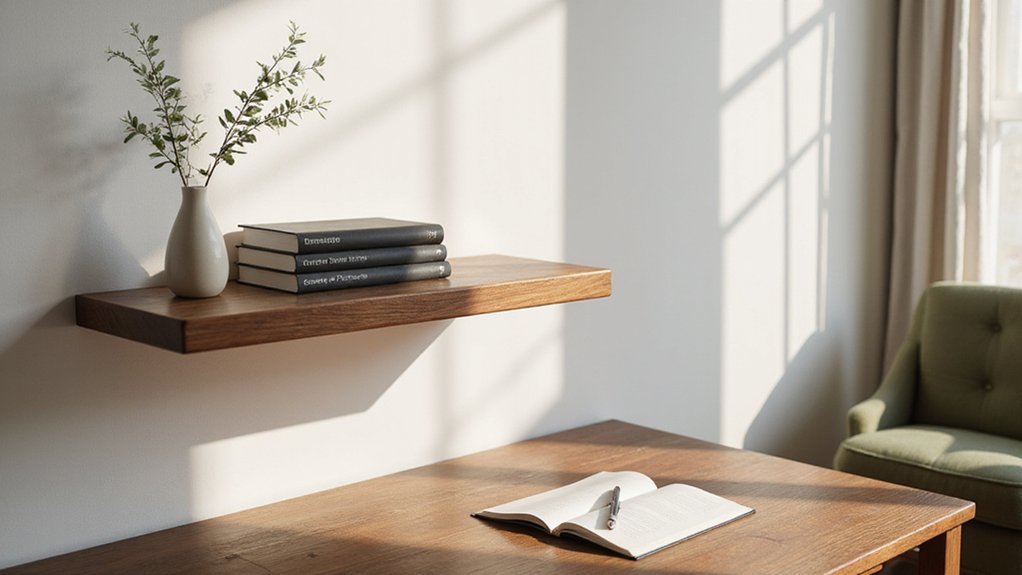
Open shelves are most effective when you organize them into three main categories: books, decor, and storage. Start by anchoring the lower shelves with books, stacking them vertically or horizontally to create varying heights and visual interest. Use bookends to group your books and help keep the arrangement tidy. To add depth, layer small artwork or decorative objects beside the books. Incorporate textures by featuring vase arrangements with contrasting materials, such as a glass vase paired with a wooden vessel. Wall-mounted sculptures serve as unexpected focal points and help define your shelf’s structure. For practical storage, place wicker baskets or fabric bins on the bottom shelf; they anchor the display while concealing clutter. These containers balance decorative pieces with functional storage, adding tactile texture. For a balanced look, place heavier items on the bottom shelves and lighter ones above. When building a custom unit, ensure the shelves are properly secured to studs to safely support heavier books and decor. Lastly, personalize your shelves with photographs or prints, keeping the color palette limited to a maximum of three shades to maintain cohesion.
Choose a Color Palette That Ties Your Open Shelves to the Room
To create a cohesive look for your open shelves, select a palette with three to four main colors. Start by choosing one dominant hue, such as a calming neutral or a lively, vibrant tone, which sets the overall mood of the room. From existing furniture, artwork, or textiles, pick two or three secondary shades that complement the main color. Limiting your palette helps prevent visual clutter and keeps the shelves feeling organized.
Reinforce the color scheme by repeating these tones across different shelf items. Books with matching or harmonious spine colors and ceramic pieces that reflect your palette create a unified look. Group similar items together, such as clusters of books or vases, to establish rhythm and balance. Applying the rule of thirds ensures a balanced arrangement across the shelves.
Add a single item in a contrasting color—like a bold ceramic or a vintage accent—to introduce visual interest and avoid monotony. Ensure the contrast piece aligns with your room’s style, whether sleek and modern or warm and rustic. Keep in mind how natural light influences your room, as it will affect how the colors appear on your shelves throughout the day. For a lasting arrangement, sort and arrange items by priority, similar to smart closet organization methods that prevent clutter from returning.
Finish Open Shelves With Plants, Art, and Warm Lighting
Finish open shelves by layering in plants, art, and warm lighting to create a polished, gallery-like effect. Start with plant placement: place trailing pothos on the upper shelves and medium-height plants at eye level. Group plants in odd numbers to achieve a natural, balanced look. For artwork, intersperse three to five pieces like driftwood arranged in tall vases among books. Mix natural elements with modern vases to avoid a beachy or overly casual vibe. Personal touches like photos enhance the gallery feel and make the space uniquely yours. This shelving setup can accommodate taller plants by using removable shelves, increasing the height for larger species up to 34.5 inches. To ensure the brackets remain sturdy under this weight, choose wall shelves with brackets rated for heavy loads. Consider adding a dedicated plate rack section within the shelves to display and store ceramic pieces securely, blending functional kitchen storage with living room decor. A DIY knife block can be adapted into the shelving design to store kitchen blades safely while maintaining a cohesive look.
Next, install warm LED strip lights with a color temperature of 2700 to 3000 Kelvin along the underside of each shelf. These lights add a cozy glow and highlight your curated objects. Place battery-operated spotlights behind key pieces, such as larger sculptures or framed art, to create dramatic backlighting. Combining natural light from east-facing windows with the warm artificial layers ensures the shelves feel inviting throughout the day. Remember to rotate your plants weekly to prevent leaning or uneven growth, maintaining a balanced and fresh appearance. This combination of greenery, curated art, and soft lighting transforms plain shelves into a lively, gallery-quality display.