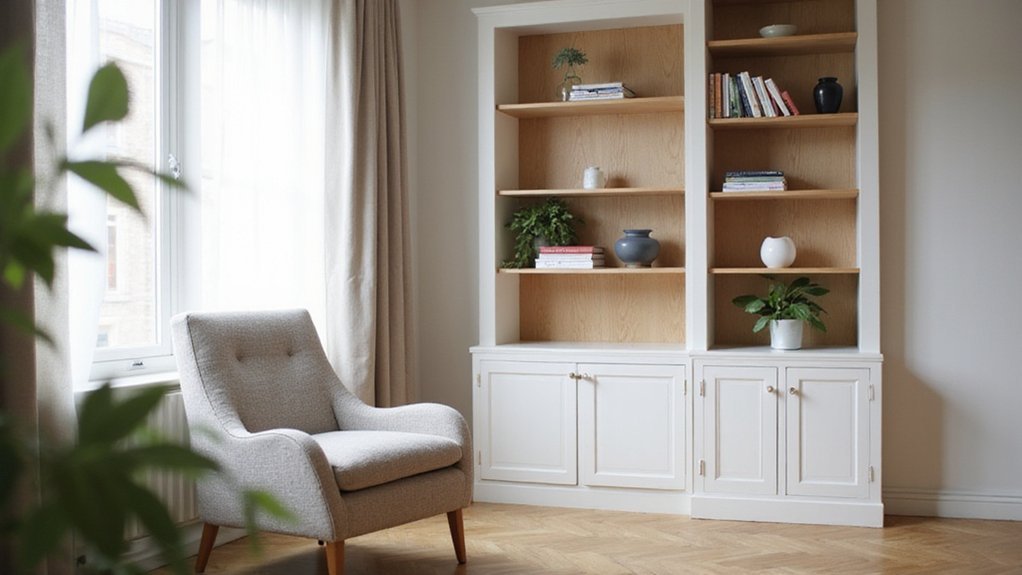
Struggling to make your built-in bookcases look polished instead of cluttered? The key is in the details—how you arrange and balance your items can transform the entire space.
With simple tweaks, you can create a stylish, cohesive display that feels intentional and inviting.
Below, you’ll find all the tips to turn your shelves into a curated showcase, no matter your style or collection size.
Start With Empty Shelves to Get It Right
Start with empty shelves to get it right. Removing every single object before rearranging allows you to build from a clean slate, preventing hours of fine-tuning later. This reset helps you establish a stronger foundation for your display and ensures you create a cohesive look without shortcuts.
Begin by anchoring your shelves with large grounding pieces. Place the biggest items first, such as stacks of books or rectangular baskets, to form a stable foundation. These items immediately set the theme of your shelves. Next, focus on item scaling: scatter three large, cohesive objects—like silver vases—across different shelves for balanced visual weight. Use these sizeable pieces sparingly to keep significant empty space, avoiding clutter. If a shelf feels overcrowded, replace several small objects with a single larger one. This strategy creates a curated, balanced display from the start. Repeating materials such as brass or gold accents establishes a consistent finish rhythm that builds visual connection across the shelves. For secure display of heavier items, consider installing wall anchors into the drywall behind the bookcase to prevent tipping or sagging. Applying a consistent sorting method for your decorative objects prevents visual chaos, much like grouping pots and pans by frequency of use streamlines kitchen storage.
Gather and Edit Decor Items Before Styling
After anchoring your shelves with large grounding pieces, gather and edit your decor items before styling. Aim for a diverse mix of objects—varying sizes help prevent visual uniformity. Incorporate contrasting materials, such as colored glass next to opaque objects, and swap round ceramics for rectangular boxes to add shape variety. Include textures like wood, brass, rattan, and natural finishes to create warmth. For cabinet shelves, consider adjustable shelf pins to easily modify spacing between items. Use a stylish shelving unit as your base to ensure the structure supports your design vision. For a polished look, you might also consider incorporating a high-quality shoe cabinet to handle hidden storage needs while keeping the displayed area uncluttered.
Establish color harmony by repeating specific tones diagonally. For example, position a brass item in the upper left corner of the shelf and another in the lower right. Select coffee table books that complement your color palette to add visual interest. For texture variation, combine gold frames with neutral-finished accessories. Creating a simple vignette with purposeful item placement ensures each grouping feels intentional and serene.
Pre-group items into small vignettes on the floor, applying the triangle principle to create rhythm and balance. Pair smaller objects with taller ones, and place tiny items on trays to reduce clutter. Declutter ruthlessly by spreading everything out and then removing about half the items. Eliminate DVD cases and board games, storing them in decorative boxes to keep the display clean and cohesive.
Arrange Books to Add Height, Color, and Visual Flow
Arrange your books to add height, color, and visual flow. Start by sorting your books into color piles—reds, oranges, yellows, and greens—to create a solid foundation. Within each pile, refine the order from light to dark shades for smooth color gradients. Position cooler blues next to warm reds to produce a rainbow effect, ensuring a cohesive visual flow across the shelf. Group books into bold, solid color blocks like red, yellow, and blue to make striking contrast. Distribute color intensity evenly across the shelf to prevent one side from feeling heavy. Consider the room’s design style to guide book cover choices, ensuring coherence in styling with a modern, bohemian, or traditional theme. For a tidy kitchen, you can apply similar principles by using cabinet organizers for pots to stack cookware by size and color. For a similar approach in a pantry, you might cut wire shelving to custom lengths using a bolt cutter for a precise fit. Unlike freestanding units, built-in bookcases offer greater durability and a permanent, custom fit that can better support heavier books and stacked cookware.
Next, incorporate height by placing larger hardcovers on lower shelves or at the bottom of horizontal stacks. Gradually arrange smaller volumes above. Stand some books upright as bookends and lay others flat to introduce vertical variation. Use decorative bookends or pedestals to elevate stacks and create different levels or layers. Keep each shelf about two-thirds full, leaving some empty space to maintain an organic, uncluttered rhythm.
Mix Heights, Sizes, and Textures for a Dynamic Look
Mixing heights, sizes, and textures on each shelf creates a dynamic and interesting display. Start by placing a tall piece, such as a vase or sculpture, to anchor the arrangement. Next, add a medium-height item like a stack of books or a smaller vase, and then include a low piece like a bowl or basket. Aim for their tops to form a loose triangle to achieve visual interest. Stack books horizontally to elevate vases or bowls to the right height, adding variation. Contrast patterns by pairing matte ceramics with shiny vases or layering soft baskets next to structured sculptures. Playful proportions work best when grouping three or five items, avoiding symmetrical pairs for a more natural look. Use oversized art or large ceramics to scale up the space and keep the tallest books on lower shelves for balance. Incorporate vintage finds to add varied surface textures, and let a cherished item sit slightly proud of the shelf edge for a relaxed touch. Remember to leave about 30 percent empty space on each shelf to prevent a cluttered feel and allow your arrangement to breathe. For a clean finish on hanging items nearby, consider using specialized clips to keep pants from slipping. To further sustain this tidy look, apply smart garage organization principles like using clear bins or labeled baskets for smaller items stored on lower shelves. Ensuring your shelves themselves are secure, use shelf clips that match the thickness of your boards for a stable foundation.
Build Cohesion by Repeating Colors and Materials
Repeating colors and materials helps create a cohesive and unified look. Start by deliberately repeating key colors—echo a brass accent from an upper shelf down to a lower one or create a zigzag pattern with artworks. Limiting your color palette prevents clutter and ensures harmony. For material consistency, group identical objects like candlesticks or pottery to form impactful clusters. Repeating finishes such as brass or bisque white across shelves establishes a visual flow. Stack smaller objects into solid blocks and arrange books by color or height to introduce rhythm. Avoid scattering single items; instead, consolidate collections into defined groups that emphasize texture and tone. Choose decorative pieces that complement your repeated material theme to balance variety with harmony, keeping the overall look streamlined and intentional. When selecting these pieces, using a fan deck helps compare colors against the wall for a subtle, pleasing effect. For lightweight decor, you can use plastic anchors to secure items without drilling into the wall. Incorporating sorted spice jars as small decorative clusters adds both texture and a practical storage solution to your shelves.
Hide Clutter With Storage Boxes That Match Your Shelf Style
To effectively hide clutter with storage boxes that match your shelf style, select containers that complement your existing materials and textures. Fabric-covered boxes or patterned wooden crates work well, especially if they align with your shelf’s design. Use opaque, lidded containers to conceal a mix of items neatly and prevent visual clutter. Color coordination enhances visual harmony. Paint or cover your boxes with fabric to match your decor, turning them into subtle accents rather than distracting elements. For small boxes, affix labels on the exposed side to quickly identify contents and add a decorative touch. Stick to uniform shapes and sizes for a cohesive look; stacking these boxes symmetrically between books or as bookends creates a deliberate, organized pattern. Dedicating an entire shelf to storage boxes can achieve a clean, curated appearance, making your built-ins look intentional and streamlined. This approach can also save you money compared to purchasing a custom closet organizer system. Prioritizing uniform box sizes ensures a consistent grid that minimizes wasted space. For even more visual appeal, consider grouping decorative objects alongside the boxes to break up the repetition and add personality.
Layer in Art, Photos, and Sculptural Objects for Depth
Layering art, photos, and sculptural objects at different depths transforms your built-in shelves into a dynamic display that resembles a gallery. Start by leaning framed art against the back of the shelf to create a background layer. Then, place smaller objects like candles slightly in front, varying their positions to add interest. Stack mixed media pieces, with the largest at the rear, to create a collected, curated look. Use different frame sizes to provide visual contrast and prevent monotony. Artistic layering involves overlapping items so they appear integrated naturally without feeling cluttered. Incorporating smart closet organization methods, such as grouping items by category and using vertical space, keeps the shelf display functional and easily maintained. For a more structured approach, consider using a wide bookcase with doors to hide clutter and maintain a clean aesthetic. Choosing a center support bracket ensures heavy rods remain stable and prevent sagging over time.
Incorporate sculptural objects to add depth and intrigue. Choose bold busts or globes and place them at different depths to anchor each shelf with a statement piece. Vary the heights and shapes of your objects to guide the eye through the arrangement. Group three items in a loose triangle to create a balanced, cohesive look. Avoid treating every compartment similarly; odd-numbered groupings generate a more natural and dynamic flow, making the display feel curated rather than cluttered.
8 Styling Mistakes That Ruin a Bookshelf: and How to Fix Every One
Even the most beautiful built-in bookcase can look flat if you ignore key styling principles. One major mistake is neglecting color harmony; sticking to a limited palette ensures your shelves look cohesive rather than chaotic. Avoid mixing too many materials at once—combining wood, ceramics, metal, and glass creates clutter. Instead, select a few complementary materials to keep the display unified. Varying height and size is crucial; combine tall books, short stacks, and small objects with larger pieces to add visual interest. Overcrowding can undermine your arrangement—leave at least 20 percent negative space to allow each item to stand out. Don’t forget depth: layer objects in front of larger pieces and elevate smaller items on risers or boxes. Lastly, infuse your personality and focus on functionality by alternating vertical and horizontal stacks, creating a curated, lively look without sacrificing practicality. For a secure and clean display, ensure your shelves are properly supported by following shelf bracket installation tips.
Balance Your Whole Bookshelf With Symmetry and Negative Space
To balance your bookshelf effectively, distribute visual weight across the entire unit instead of making every shelf identical. Reserve the top and bottom shelves for large decor pieces that anchor the design, while placing smaller objects at eye level to achieve proportion. Mix heavy sculptural ceramics with light glass vessels, and store larger books low with smaller reads on higher shelves. This approach ensures visual weight is evenly spread.
Intentionally leave 30 to 40 percent of each shelf empty to create negative space. Distribute this space unevenly for a more organic, natural rhythm. Aim to fill your shelves to about half or two-thirds capacity, applying the 70-30 rule—70 percent books and 30 percent decor plus negative space. Maintaining at least 20 percent negative space overall helps prevent clutter and keeps the arrangement airy.
Use symmetry to position centerpiece objects at the center of the shelf. But occasionally, break this symmetry with asymmetrical placements for a more relaxed look. Group objects in odd numbers—three or five—since this creates visual interest. Mix finishes, combining matte and shiny surfaces to add depth. This balance of symmetry and asymmetry, combined with thoughtful grouping, results in shelves that are both calming and visually engaging.