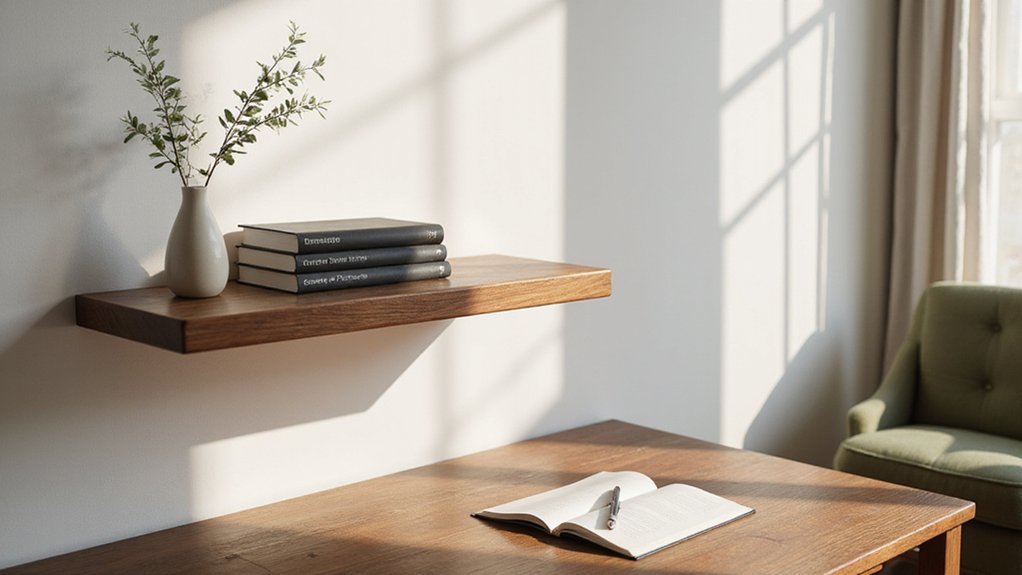
Struggling to make your bookshelf look polished and inviting? The key is to keep things simple and balanced. By choosing a limited color palette, arranging books and decor thoughtfully, and leaving some space, you can create a look that feels intentional and stylish.
The rest of this article will walk you through the essential tips for styling a bookshelf like a pro.
Choose a Color Palette for Your Bookshelf Styling
Choosing a color palette is the first step in styling your bookshelf. Aim for 3 to 5 colors to keep the look cohesive and impactful, especially on smaller shelves. Start by selecting a dominant base color, such as white for an airy feel or deep navy for a more sophisticated vibe. Then, add in warm and cool tones to create balance and contrast. Organize your books into broad color categories like blues, neutrals, or earth tones before accessorizing with bookends or display pieces in complementary colors. Be mindful of undertones—avoid clashing shades near direct sunlight, as this can wash out your scheme. You can apply practical sorting methods to group your items by color, just as you would organize pots and pans to keep everything tidy and accessible. Remember, for heavier items, you may need to install wall anchors in the drywall to ensure the shelf remains secure. If your shelves are adjustable, you can also cut wire shelving to achieve a custom fit for your space. By carefully selecting and balancing your palette, you’ll establish an intentional look that enhances your space without feeling chaotic. Remember, the key is harmony and control, not just bold contrasts.
Place Books by Height and Weight for Visual Flow
Arrange books by height and weight with taller books on the lower shelves to distribute weight evenly and prevent instability. Shorter books should go on the upper shelves to create a balanced, grounded appearance. This technique emphasizes height balance and proper weight distribution, which helps maintain the structural integrity of your shelves. Avoid stacking books into tall, pyramid-like formations that concentrate weight and increase the risk of toppling. Instead, keep book heights within horizontal stacks for a uniform, stable look. For mixed orientations, alternate vertical rows of tall books with horizontal stacks of shorter ones to guide the eye smoothly across your shelves. Group books of similar sizes together, but don’t overthink it; trust the visual rhythm created by heavier items on the lower shelves and lighter items above. For a more structured approach, consider building a custom knife block to understand how dedicated compartments distribute weight evenly across multiple rows. This method keeps your shelves feeling solid and effortless, leading the eye naturally from top to bottom without abrupt shifts. For more sturdy construction, consider using corner shelf plans that include specific weight distribution guidelines. You can also apply removal and replacement steps from cabinet projects when adapting shelf hardware to ensure secure installation.
Group Items in Odd Numbers for Shelf Cohesion
To create a cohesive group of three items on your shelf, keep the number odd—three is ideal. Tie them together with a consistent color palette or finish, so they look unified despite differences in style or material. Vary their height and shape to add visual interest: place the tallest item slightly off-center and combine round with rectangular shapes to keep the arrangement lively. Leave at least two inches of space between each piece and maintain some negative space above the group to prevent clutter and give each object room to stand out. This spacing ensures the odd number creates an effortless, intentional flow while allowing each piece to shine.
Layer Objects With Textures, Art, and Greenery
Leaning framed artwork against the back of your shelf instantly breaks up monotony and adds personality. To create a dynamic display, place smaller frames in front of taller vases or greenery, crafting a collected and layered look. Use stacked books as risers, allowing objects to sit at different heights for added depth and visual interest. This layering technique introduces dimension that straight rows alone can’t achieve. Apply the rule of thirds for a balanced arrangement across the shelf, guiding the eye naturally. This approach also emphasizes visual rhythm across your entire setup, ensuring no single shelf feels disconnected. Consider alternating the placement of taller art pieces with shorter objects to maintain a consistent flow across the entire bookcase. For a functional twist, consider incorporating a small cabinet with plate rack to display cherished ceramics alongside your books.
Integrate organic elements such as trailing ivy or driftwood to soften hard lines and add warmth to the space. Incorporate shells or stones for varied texture. Mixing different materials—smooth ceramics with rough wood, glass with woven baskets—creates visual rhythm and prevents a flat appearance. Combine taller art pieces with medium-sized candles and small accents to guide the eye across the shelf. The interplay of textures and greenery helps your bookshelf feel curated and vibrant.
Use Negative Space to Create Breathing Room and Balance
Using negative space is essential for creating breathing room and balance on your shelves. Aim for about a 70/30 fill-to-empty ratio: fill your shelves to roughly 70 percent of their capacity, leaving 30 percent as empty space. This empty space isn’t wasted; it helps prevent visual clutter and makes each item stand out.
Leave at least one-third of each shelf completely clear to enhance openness. Place empty space strategically between groupings or along shelf edges to separate small vignettes. This separation helps avoid a chaotic look and guides the eye smoothly across the display.
For balance, if you showcase a large centerpiece on one shelf, follow it with two smaller groupings on the shelf below. Use odd-numbered groupings, such as three or five objects, to create a more dynamic and engaging arrangement. Consciously leaving gaps and empty space ensures your shelves look curated rather than cluttered. This principle of strategic emptiness can also be applied to deep pantry shelves for effective organization.