Ever wonder how to keep your spice stash from turning into a dusty mess? The key is simple: toss out any jars with clumps, faded labels, or weak smells.
Store your frequently used spices in clear, airtight containers.
Grouping spices by how often you use them and labeling everything makes staying organized much easier.
Keep reading for all the tips you need to make your spice cupboard both practical and tidy.
Purge and Inventory Your Spice Collection
Start by inspecting every jar for spice expiration dates. Discard any that are past their prime—clumpy ground spices, faded colors, or weak aromas indicate flavor loss. Taste-test questionable items; if they don’t “pop” with flavor, toss them out. This step ensures your collection remains fresh and flavorful.
Next, identify duplicates. Group identical jars together to easily spot redundancies. Consolidate these into one container to save shelf space. Set aside any extras to prevent unnecessary purchases later. As you sort, prioritize your collection based on usage: separate your daily favorites from specialized blends. Pick out your top eight most-used spices for quick access. For even more space, consider designating a specific drawer or cabinet for your most-used items to keep counters clear. Finally, jot down essential restocking needs, focusing on items you’ll use within six to twelve months. This process clears clutter and simplifies your spice organization. For heavier spice jars that you plan to hang on drywall, consider using wall anchors to ensure a secure and stable mount.
Choose Airtight Containers for Your System
Airtight containers ensure your spices stay fresh longer. Choose containers with seals that prevent oxygen, heat, light, and moisture from degrading essential oils. Glass jars are non-reactive and do not alter the flavor, making them ideal for maintaining taste. Food-grade, BPA-free plastic containers are lightweight and cost-effective, perfect for frequent use or bulk storage. Stainless steel options block light and provide durability, making them suitable for long-term storage. Match container size to your spice volume: small 1 to 2 ounce jars are best for frequently used single spices, while larger 4 to 8 ounce jars work well for bulk herbs. Wide openings simplify filling and pouring, and uniform sizes help keep your spice storage organized. To securely store your jars, consider mounting shelves on concrete walls for a sturdy and permanent solution. Displaying open kitchen shelves can make your commonly used spice jars both accessible and visually appealing. Remember to label each jar with the spice name and date, and keep them away from heat sources like stoves to prevent heat damage. You can use small bins or dividers to group similar spices together for easier access. Proper materials and tight seals extend shelf life and protect your spices from pests, ensuring they stay potent and flavorful for longer periods.
Group Spices by Use Case and Frequency
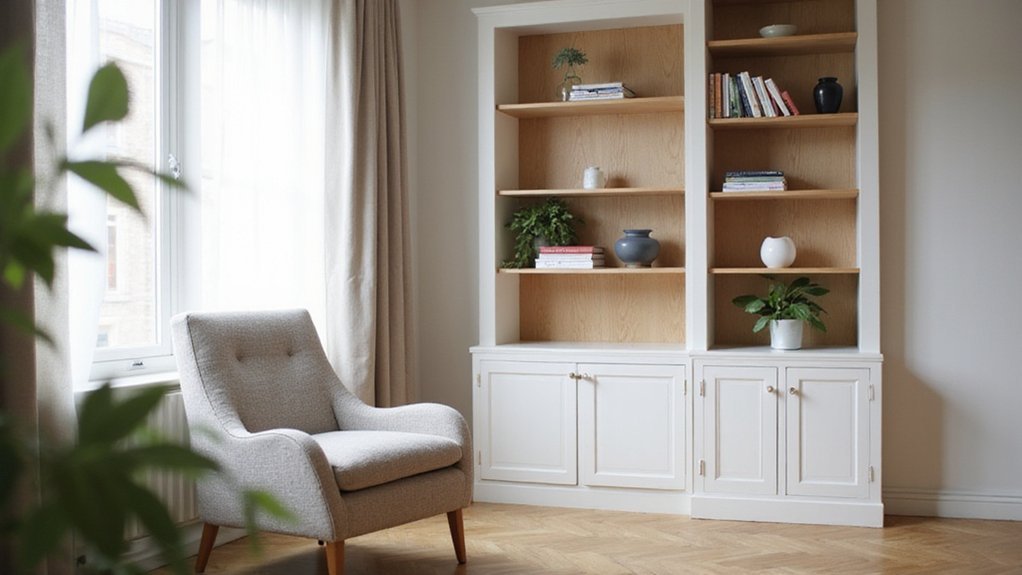
Group your spices by how often you use them and what you cook to streamline meal prep. Start with a quick usage analysis: identify your top eight to fifteen weekly staples—those you’d replace immediately if empty—and reserve eye-level shelf space for them. Move monthly or seasonal spices to higher, lower, or drawer tiers to keep less frequently used flavors out of sight. For example, you can apply similar practical methods from organizing pots and pans to sort and arrange your spices effectively. To maximize visibility and access, ensure your pantry shelf is deep enough to accommodate standard spice jars without stacking them two deep. Consider applying the same layout inspiration and practical tips used for built-in bookcases to create a visually cohesive and accessible spice display.
For effective flavor mapping, cluster spices by cuisine: separate Italian herbs from Asian spices, group chili and Mexican blends together, and keep salt, pepper, garlic, and onion in your foundational zone. Assign distinct areas for rubs versus baking spices to further organize your collection.
It’s important not to let your system go static. Conduct a quarterly five-minute tune-up: review your last thirty days of cooking, shift one or two jars between zones based on current patterns, and log what you grab over a week to validate your setup. This ongoing adjustment ensures your spice storage remains aligned with your evolving tastes and cooking habits.
Store Spices in Dark, Cool, Accessible Spots
Store your spices in a dark, cool, and accessible spot to preserve their flavor and extend shelf life. Light exposure, especially from sunlight or bright kitchen fixtures, can break down essential oils and degrade spices over time. Use opaque containers like tins or dark glass jars to block light effectively. Keep spices away from heat sources such as stoves or ovens, as heat accelerates chemical reactions that diminish potency. Instead, store them in a cupboard, pantry, or drawer located away from windows and heat. Choose airtight containers made of metal or glass to prevent moisture and air from entering, which helps keep ground spices fresh for six to ten months. For convenience, place your most-used spices on eye-level shelves, ensuring they’re within easy reach without compromising darkness. When scooping out spices, always dry utensils to prevent moisture from introducing spoilage.
Label and Date Every Spice Container
To keep your spice storage organized and easy to navigate, always label and date each container. Write the spice name clearly on the front of the jar, making it your primary identifier for quick recognition. Include purchase and best-by dates to track freshness and know when to discard old jars before they lose flavor or quality. For added organization, note lot codes or allergy information if relevant. Compliance with FDA guidelines requires that labels also include nutritional information for any spices containing salt, sodium, fats, cholesterol, or sugars. You can also build custom shelving using DIY plans to maximize your vertical spice storage.
Select a label design that prioritizes readability and durability. Clean the jar thoroughly with rubbing alcohol before applying a waterproof label to prevent smudging or smearing. Use bold, legible fonts so you can identify spices at a glance, especially in tight storage spaces. You can create handwritten labels for a low-cost approach or print them for a uniform look. Match label colors to the spice inside—warm oranges for chili powder or vibrant greens for herbs—to help you quickly distinguish flavor profiles. When applying, smooth the label from the center outward to eliminate bubbles and wrinkles. This system results in a tidy, cohesive spice drawer that’s both functional and visually appealing.
Maintain Your Spice System With Quarterly Reviews
Conduct a thorough quarterly audit of your spice collection. Begin by checking expiration dates and sniffing each spice for a fresh aroma; a weak or stale smell indicates it’s time to discard. Remove any containers with faded labels, cracks, leaks, moisture, clumping, or mold. These signs suggest deterioration or contamination and can compromise your other spices. Consider storing spices in a cabinet with plate rack to keep them organized and easily accessible alongside your dinnerware. For a more flexible system, you might also explore top pegboard basket options that allow for customizable wall-mounted storage. You could also install a lowered overhead rack in your pantry to maximize vertical space for less frequently used spice backups.
Reorganize your collection by moving your most used spices to easily accessible spots. Replace faded labels and update your inventory system so you know what’s running low. Wipe down storage surfaces and clean the exterior of containers to keep them looking fresh. Inspect for pests and discard any containers showing signs of infestation or damage. Finally, note any missing spices needed for upcoming recipes and schedule your next review. This regular maintenance keeps your spice system efficient, safe, and ready for flavor.
Source Bulk Spices That Fit Your System
To ensure you get the best bulk spices for your system, consider online ordering from trusted retailers like The Spice House or MySpiceSage. These sources offer a wide range of unique spices to meet specific needs. Opt for whole spices rather than ground ones because whole spices retain their flavor longer and stay potent until you grind them, providing fresher, more intense flavor in your dishes. Establish a business account with wholesale distributors like Frontier Herbs or Starwest Botanicals to access better pricing for recurring large-volume orders. Frontier Herbs tends to offer the most affordable organic options, making it ideal if cost is a top priority. Meanwhile, Starwest Botanicals specializes in high-quality spices suitable for more refined, specialized dishes. Comparing these options helps you balance quality and price, ensuring your spice system remains versatile and economical. For long-term storage, follow methods like sorting and arranging clothes in an actual storage unit to keep items protected from moisture and pests. Implementing effortless bed sheet storage tips can also help protect your spice containers from clutter and disorganization. Properly grouping similar spices into designated cabinet zones prevents wasted time searching during cooking.